

Rist
| Selles artiklis on õigekeele- või stiilivigu. Palun aita artiklit keeleliselt parandada. |
Rist on geomeetriline kujund, mis koosneb kahest ristuvast joonest poolitades kas ühe või kaks joont keskelt kaheks võrdseks osaks. Tavaliselt jooksevad jooned horisontaalselt ja vertikaalselt. Juhul kui jooned jooksevad diagonaalis on tegemist Andrease ristiga.
Risti kui sümbolit on inimesed kasutanud sajandeid ning eriti erinevates religioonides, näiteks kristluses. Risti on tõlgendatud kui nelja põhielemendi sümbolit. Rist kui põhiilmakaarte jaotus.
Sisukord |
[redigeeri] Kirjamärgid
Riste kasutatakse kirjutamisel erinevatel eesmärkidel, eriti matemaatikas
- Rooma numbrites tähistab nubrit kümme X.
- Ladina tähestikus on täht X and the minuscule form of t are crosses.
- Hiina tähestikus on number kümme
- Liitmistehte puhul kasutatakse plussmärki (+) ja korrutamise puhul korrutusmärki (x)
[redigeeri] Embleemid ja sümbolid
| Risti nimi | Kirjeldus | Pilt | |
|---|---|---|---|
| Ladina rist |
Ladina rist ehk crux ordinaria. Levinuim sümbol kristluses, mis tähistab Jeesuse surma läbi risti löömise. |
||
| Ankh |
Ankh oli kasutusel egiptuse hieroglüüfina. Hieroglüüfina tähistas ankh alguses Egiptuse sõna ('peegel' või 'pilt'), aga hiljem sai elu tähistavaks sümboliks. Ladinakeelne nimetus on crux ansata. |
||
| Kopti ankh |
Kopti ankh on Ankh, mis kujunes enne algupärast Kopti rist varajastestGnostikutest Egiptuse kristlastelt. |
||
| algne Kopti rist |
Algne Kopti rist oli kasutusel Egiptuses. |
||
| Päikserist |
Tuntud ka kui Päikeseratas, solar rist or Odini rist, kuna Odini sümbol Põhjamaade mütoloogias oli rings asetsev rist. Seda kasutasid ka ameerika pärismaalased, mis nende kultuuris tähendas suurt elu Meditsiini ratast. |
||
| Keldi rist |
Kelti rist on tavapärane Iirimaal kirikutes ja surnuaedades. |
||
| Kopti rist |
Väike ring, millest väljuvad neli ühepikkust joont ja T-kujuliselt painutatud joont nurkadest, mis tähistavad Jeesuse risti löömiseks kasutatud naelu. |
||
| Kanterburi rist |
Kasutusel Anglikaani kirikutes. |
||
| Kreeka rist |
Tuntud ka kui crux immissa quadrata. |
||
| Idarist |
Sümboliseerib hea võitu halva üle. |
||
| Püha Brigitta rist |
Tuntud igal pool Iirimaal. |
||
| Labarum |
Tuntud ka kui Chrismon, Chi-Rho |
||
| Lorraine rist | |||
| Mariani rist |
Katoliiklaste poolt traditsioonilise ladina risti kasutamine sümboliseerimaks katoliiklaste pühendumist neitsi Mariale. |
||
| Skandinaavia rist |
Kasutusel erinevatel Põhjamaade lippudel. |
||
| Provansi rist | |||
| Paavsti rist |
Kolm joont sümboliseerivad paavsti kolme rolli: Rooma piiskop, Lääne patriarh ja püha Peetri järglane. |
||
| Patriarhaalne rist |
Sarnaneb traditsioonilisele kristlikule ristile, kuid peamise põiktala kohal on teine, väiksem põiktala, mis sümboliseerib kõiki Õigeusu kristlaste peapiiskope ja patriarhe. Ida-Õigeusu kirik kasutab ka risti, kus on ka kolmas veidi viltune põiklatt. See asub risti jala juures (vaata Bütsantsi rist). Patriarhaalne rist rist sarnaneb Lorraine ja Caravaca ristiga. |
||
Presbyterian Cross
|
Used by Presbyterian denominations. | ||
| Punane rist |
Kasutusel maailmas kui meditsiini sümbol. Punane kuusirp on kasutusel islami maades ja Magen David Adom Israelis. |
||
| Cross of Sacrifice |
A Latin cross with a superimposed sword, blade down. It is a symbol used by the Commonwealth War Graves Commission at the site of many war memorials. |
||
| Royal Flag of Georgia |
Used in Georgia as national flag, first used by Georgian King Vakhtang Gorgasali in the 5th century and later adopted by Queen Tamar of Georgia in the 13th century. The flag depicts a Jerusalem cross, adopted during the reign of George V of Georgia who drove out the Mongols from Georgia in 1334. |
||
| St. Nino's Cross |
Also known as a "Grapevine cross" and traditionally ascribed to Saint Nino, the 4th-century female baptizer of the Georgians, it is used as a symbol of the Georgian Orthodox Church. |
||
| St. Thomas Cross |
Also known as a "Mar Thoma Cross" and traditionally ascribed to Saint Thomas,the Apostole of India, it is used as a symbol of the Syro Malabar Catholic Church and venerated by all Saint Thomas Christians denominations. |
||
| Andrease rist |
Kasutusel Šoti rahvuslipul ja naval ensign of the Venemaa mereväe embleemil, kutsutakse ka Vapiristiks. Püha Andreas olevat surnud märtrisurma selllisel ristil. Ka sümbolit X võib kutsuda püha andrease ristiks. |
||
| Püha Jüri rist |
Kasutusel Inglismaa rahvuslipul. |
||
| Püha Patriku rist |
Iirimaa lipp koos Inglismaa lipu detailidega. |
||
| Püha Peetruse rist/Tagurpidi rist |
Tagurpidi pööratud ladina rist, mille põhimõte pärineb sellel, et Püha Peetrus suri märtrisurma ristile olles ristil tagupidi. Tänapäeval kasutavad seda antikristlased või satanistlikud grupid. |
||
| Pealuu ja ristatud kondid |
See pole küll otseselt rist, kuid sellel on kujutatud ristatud konte, mille peal on pealuu. Tavaliselt seondatakse seda piraatidega, kuid tegelikultei kasutanud nad seda eriti tihedalt, sest igal laeval oli oma disainiga lipp, millel oli tihti kasutusel liivakell. |
||
| Tau rist |
Also known as Saint Anthony's Cross, the Egyptian Cross and the crux commissa. It is shaped like the letter T. Francis of Assisi used it as his signature. |
||
| Varaste rist |
Tuntud ka kui Furka rist. Kahvli kujuga, meenutab tähte Y. [1] |
||
| Meremeeste rist |
Meremeeste rist on rist, mis on tuletatud ankru kujutsest. Mariner's Cross is also referred to as St. Clement's Cross in reference to the way he was martyred. |
||
| Order of Christ Cross |
Algselt kasutusel Portugali Order of Christ. Since then it has become a symbol of Portugal, used on the sails of the carracks during the Discoveries Era, and currently by the Portuguese Air Force. |
||
| Rõngasrist |
Rõngasrist ehk päikeseratas ehk päikeserist ehk ratasrist on rist, mis koosneb rõngast ja ristist. Näiteks Kareda vald kasutab oma vapil rõngasristi. |
[redigeeri] In heraldry
These crosses are ones used primarily or exclusively in heraldry and do not necessarily have any special meanings commonly associated with them. Not all the crosses of heraldry and the crosses with commonly known contexts are listed below.
| Risti nimi | Kirjeldus | Pilt |
|---|---|---|
| The cross as heraldic "ordinary" |
A simple heraldic cross (the default if there are no additional specifying words) has arms of roughly equal length, artistically proportioned to the particular shape of the shield, which extend to the edges of the shield. Illustrated is the blazon "Azure, a cross Or" (i.e. a gold cross on a blue shield). A cross which does not extend to the edges of the shield is humetty, in heraldic terminology. |
|
| Cross anchry |
A stylized cross in the shape of an anchor. Also known as the anchored cross or mariner's cross. |
|
| Cross barbée |
Also known as the cross barby or arrow cross, this symbol consists of two double-ended arrows in a cross configuration. Best known today for its use by the fascist Arrow Cross Party in the 1930s, the symbol actually dates to ancient times and was used by Hungarian tribes in the Middle Ages. In Christian use, the ends of this cross resemble the barbs of fish hooks, or fish spears. This alludes to the Ichthys symbol of Christ, and is suggestive of the "fishers of men" theme in the Gospel. |
|
| Cross bottony |
A cross with the ends of the arms bottony (or botonny), i.e. shaped like an architectural trefoil. It occurs counterchanged on the flag of Maryland. |
|
| Cross cercelée |
A cross which, opening at the ends, turns round both ways, like a ram's horns. |
120px |
| Cross crosslet |
A cross with the ends of each arm crossed. |
|
| Crusaders' cross |
Also known as the Jerusalem cross. This cross was the symbol of the Crusader Kingdom of Jerusalem, which existed for almost two hundred years after the First Crusade. The four smaller crosses are said to symbolize either the four books of the Gospel or the four directions in which the Word of Christ spread from Jerusalem. Alternately, all five crosses can symbolize the five wounds of Christ during the Passion. This symbol is also used in the flag of Georgia. |
120px |
| Cross fleury |
A cross with the ends of the arms fleury (or flory), having a shape like a fleur-de-lys. |
|
| Cross fourchee |
One form of the heraldic cross fourchee (fourchée, fourchy) or cross fourche (meaning "forked"). |
|
| Cross fylfot |
Upright cross with truncated bent arms |
|
| Jeruusalemi rist |
A variant of the Crusaders' cross with cross potent. It is also the logo for the Knights and Dames of the Holy Sepulcher of Jerusalem as well as the Franciscan order's Custody of the Holy Land. The Kairos retreat bestows this cross on its participants. |
|
| Maltese cross |
With arms which narrow towards the center, and are indented at the ends. The "eight-pointed cross" (with no curved lines). |
|
| Cross moline |
In a cross moline, the ends of the arms are split and curved back. |
|
| Cross patonce |
A cross patonce is more or less intermediate between a cross pattée and a cross flory (or fleury). |
|
| Cross pattée |
A cross pattee (pattée, patty) has arms narrowing towards the centre, but with non-indented ends. See also Iron Cross. |
|
| Cross pommee |
A cross pommee (pommée, pommy) has a circular knob at the end of each arm. |
|
| Cross potent |
This cross has a crossbar at the end of each of its arms. "Potent" is an old word for a crutch, and is used in heraldic terminology to describe a T shape. This cross was used as a crest by Konishi Yukinaga, a Christian daimyo under Toyotomi Hideyoshi. |
|
| Quadrate |
A cross with a square at the intersection point. |
|
| Cross triple parted and fretted |
In heraldry, a "cross triple parted and fretted" (or "treble parted and fretted") is interlaced. Here, a version which is "Or on an Azure field" (gold on blue) is shown. |
|
| Cross voided |
A "cross voided throughout", also known as the Gammadia, can be seen as a Greek cross with its centre lines removed, or as composed of four angles (L shapes) separated by a thin space. So the name "gammadia" refers to its being made up of four shapes similar to a capital Greek letter gamma; the word gammadion can also refer to a swastika. |
|
| Cross fitchy | A cross fitchy is a variation where the lower part is fashioned as a sword blade. This can be combined with other variations, e.g. cross crosslet fitchy. | |
| Cross of St James |
The Cross of St. James, similar to a Cross Flory Fitch, is formed by a Cross Flory, where the lower part is fashioned as a sword blade (fitched)—making this a cross of a warrior. It is most frequently depicted in red. (The version depicted here is the one used by the order of Santiago.) |
There are numerous other variations on the cross in heraldry. See heraldry for background information.
The semi-classic book A Glossary of Terms Used in Heraldry by James Parker (1894) is online, and contains much information about variants of crosses used in heraldry.
[redigeeri] Lipud
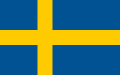
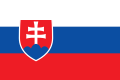
Risti on kujutatud paljude riikide lippudel. Tuntuimad neist on Skandinaavia riigid, millede risti teatakse kui skandinaavia risti. Lõunapoolkera riikide hulgas on lippudel kasutusel Lõunarist. Alates 17. sajandist on Šveitsi lipul kujutatud võrdkülgne valge rist punasel ruudul. Organisatsioon Punane Rist võttis oma lipu kujutise Šveitsi lipu järgi.
-
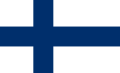
Soome lipp -
Šveitsi lipp -
Rootsi lipp -
Slovakkia lipp -
Gruusia lipp -
Šoti lipp -
Punase Risti lipp -
Austraalia lipp